SOLTAR
INSTITUTION
A wearable system that turns movement into music and haptic feedback, helping people release emotion through their bodies.
Politecnico di Milano
YEAR
2025
ROLE
· Industrial Design · Electronics Integration
TEAM
· Alessandro Bocquet
· Efe Eren Bakır
· Sherif Rateb
· Louis Lu
· Kexin Ma
· Aranza Alcalá
A wearable system that turns movement into music and haptic feedback, helping people release emotion through their bodies.


The Challenge
The Challengue
Many people use music and movement as a way to regulate emotions, yet social pressure, self-consciousness, and the lack of accessible spaces often prevent them from fully expressing themselves.
The challenge was to create a wearable experience that helps users feel safe, present, and emotionally connected through embodied interaction.




The Solution
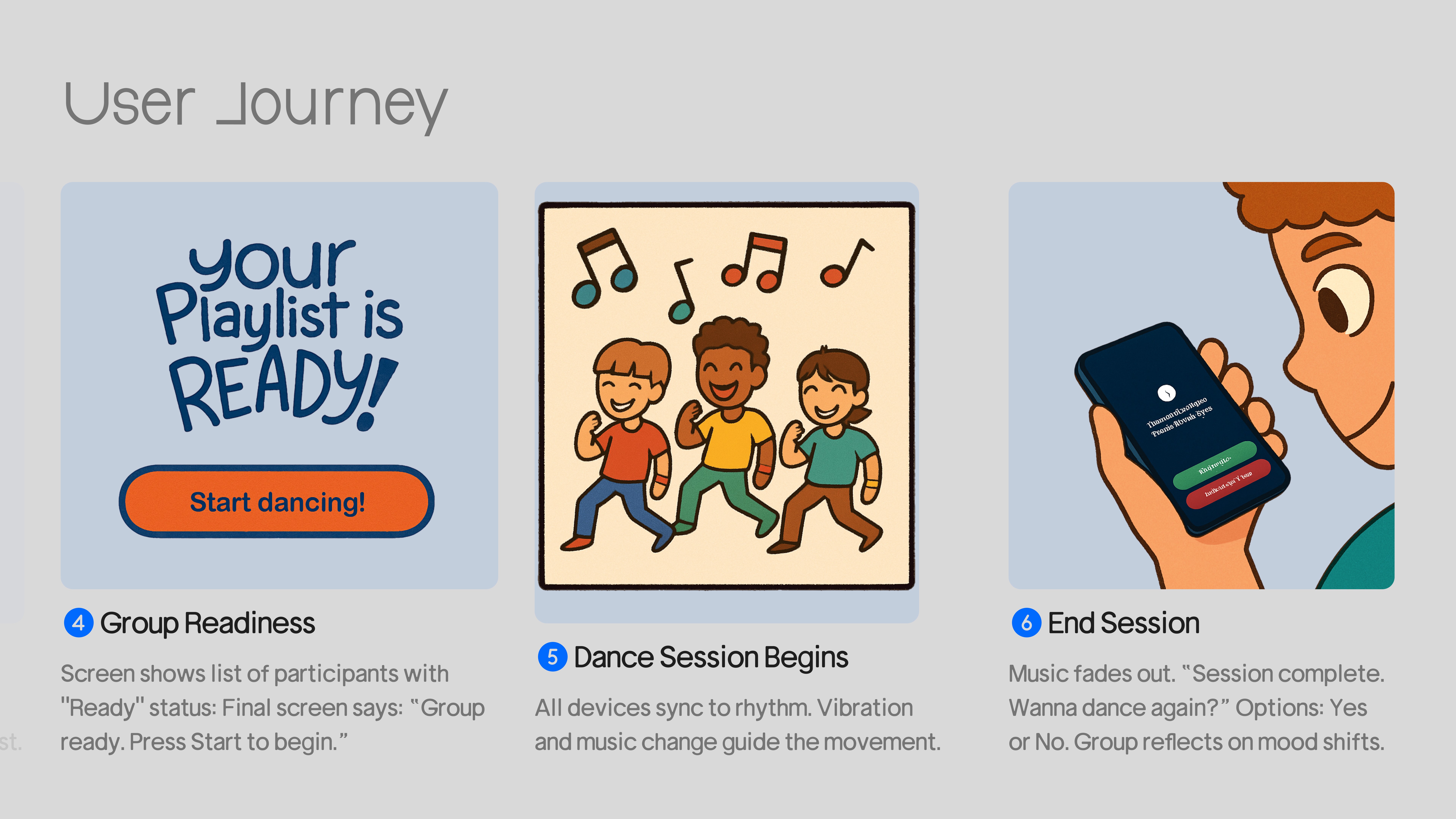
We designed Soltar as a wearable system that translates body motion into adaptive vibrations and music-responsive sound — an interaction that lets people reconnect with their bodies and express emotion freely, moving from tension or self-consciousness toward comfort and flow.
My contribution: I contributed to concept development, wearable design, prototyping, and user testing — helping shape the interaction experience and the wearable system itself through an iterative testing process that translated research insights into physical and digital interactions supporting emotional expression through movement.


Outcome
The final prototype combines wearable technology, adaptive haptic feedback, and music-responsive interactions into a system that supports emotional expression through movement. Through multiple iterations and extensive user testing, Soltar demonstrates how embodied interaction can be used to foster wellbeing, self-awareness, and social connection.

This will hide itself!
SOLTAR
INSTITUTION
A wearable system that turns movement into music and haptic feedback, helping people release emotion through their bodies.
Politecnico di Milano
YEAR
2025
ROLE
· Industrial Design · Electronics Integration
TEAM
· Alessandro Bocquet
· Efe Eren Bakır
· Sherif Rateb
· Louis Lu
· Kexin Ma
· Aranza Alcalá
A wearable system that turns movement into music and haptic feedback, helping people release emotion through their bodies.
The Challenge
The Challengue
Many people use music and movement as a way to regulate emotions, yet social pressure, self-consciousness, and the lack of accessible spaces often prevent them from fully expressing themselves.
The challenge was to create a wearable experience that helps users feel safe, present, and emotionally connected through embodied interaction.
The Solution
We designed Soltar as a wearable system that translates body motion into adaptive vibrations and music-responsive sound — an interaction that lets people reconnect with their bodies and express emotion freely, moving from tension or self-consciousness toward comfort and flow.
My contribution: I contributed to concept development, wearable design, prototyping, and user testing — helping shape the interaction experience and the wearable system itself through an iterative testing process that translated research insights into physical and digital interactions supporting emotional expression through movement.
Outcome
The final prototype combines wearable technology, adaptive haptic feedback, and music-responsive interactions into a system that supports emotional expression through movement. Through multiple iterations and extensive user testing, Soltar demonstrates how embodied interaction can be used to foster wellbeing, self-awareness, and social connection.
This will hide itself!
SOLTAR
INSTITUTION
A wearable system that turns movement into music and haptic feedback, helping people release emotion through their bodies.
Politecnico di Milano
YEAR
2025
ROLE
· Industrial Design · Electronics Integration
TEAM
· Alessandro Bocquet
· Efe Eren Bakır
· Sherif Rateb
· Louis Lu
· Kexin Ma
· Aranza Alcalá
A wearable system that turns movement into music and haptic feedback, helping people release emotion through their bodies.
The Challenge
The Challengue
Many people use music and movement as a way to regulate emotions, yet social pressure, self-consciousness, and the lack of accessible spaces often prevent them from fully expressing themselves.
The challenge was to create a wearable experience that helps users feel safe, present, and emotionally connected through embodied interaction.
The Solution
We designed Soltar as a wearable system that translates body motion into adaptive vibrations and music-responsive sound — an interaction that lets people reconnect with their bodies and express emotion freely, moving from tension or self-consciousness toward comfort and flow.
My contribution: I contributed to concept development, wearable design, prototyping, and user testing — helping shape the interaction experience and the wearable system itself through an iterative testing process that translated research insights into physical and digital interactions supporting emotional expression through movement.
Outcome
The final prototype combines wearable technology, adaptive haptic feedback, and music-responsive interactions into a system that supports emotional expression through movement. Through multiple iterations and extensive user testing, Soltar demonstrates how embodied interaction can be used to foster wellbeing, self-awareness, and social connection.
This will hide itself!